

Eight years after Orville and Wilbur Wright first flew at Kitty Hawk, North Carolina, Georgetown, South Carolina had its own flying machine. In July 1911, two local brothers rolled an airplane onto the old rice fields at Willowbank Plantation, just outside town, and set out to get it into the air. Their father stood nearby with a camera.
This is the story of Willowbank, Georgetown’s first airstrip, and the Tarbox family who made it one.
Willowbank Plantation and the Tarbox family
Like much of the land around Georgetown, Willowbank was rice country: low, flat fields worked for generations before the rice culture collapsed in the late 1800s and early 1900s. By the 1890s, Willowbank was associated with the Tarbox family. In September 1897, a notice signed by F.G. Tarbox ran in the Georgetown Semi-Weekly Times warning people away from Willowbank Plantation: no hunting, shooting or trespassing “with or without guns or dogs.”
F.G. was Frank G. Tarbox (1856–1940), and he left Georgetown an extraordinary gift: a large collection of photographs of Georgetown County in the early 1900s. Today the Georgetown County Library holds them as the Tarbox Family Photograph Collection, digitized and free to browse online. It is one of the best visual records of the town at the turn of the century.
July 1911: Georgetown takes flight
Frank’s sons brought aviation to Willowbank. John Preston Tarbox (1884–1965), a Georgetown native working as a patent attorney in Philadelphia, owned an airplane and had patented an invention for it: a balancing mechanism designed to keep an airplane steady side to side and front to back “under all conditions of flight.” His younger brother, Gurdon L. Tarbox (1888–1971), was the pilot.
The brothers used Willowbank’s former rice fields as their airstrip. The ground was flat, open and close to home. Their first successful flight came in July 1911, and the town noticed. On July 15, 1911, the Georgetown Times ran the headline:
“Flying Through Air / A new invention for an aeroplane by a young Georgetown Man”
Frank Tarbox photographed it all. His pictures, now in the library’s collection, show the small airplane parked in a Willowbank field, Gurdon seated at the controls, and the empty former rice fields that served as a runway. The library’s catalog describes the brothers’ flights over those fields as the first airplane flight in Georgetown.
See the 1911 photographs: search “Tarbox Airplane,” “Gurdon Tarbox in Early Airplane” and “Former Rice Fields at Willowbank” in the Georgetown County Digital Library.
From Willowbank to Georgetown County Airport
Georgetown’s aviation story didn’t end in a rice field. In 1941, the U.S. Navy built an airfield outside Georgetown. During World War II it served as an auxiliary field, and from May to August 1942 Army Air Forces observation squadrons flew antisubmarine patrols over the Atlantic from it. In June 1944 the field was turned over to civil authorities, and it became today’s Georgetown County Airport. Three decades after the Tarbox brothers’ test flights, Georgetown had a real runway.
Willowbank becomes a neighborhood
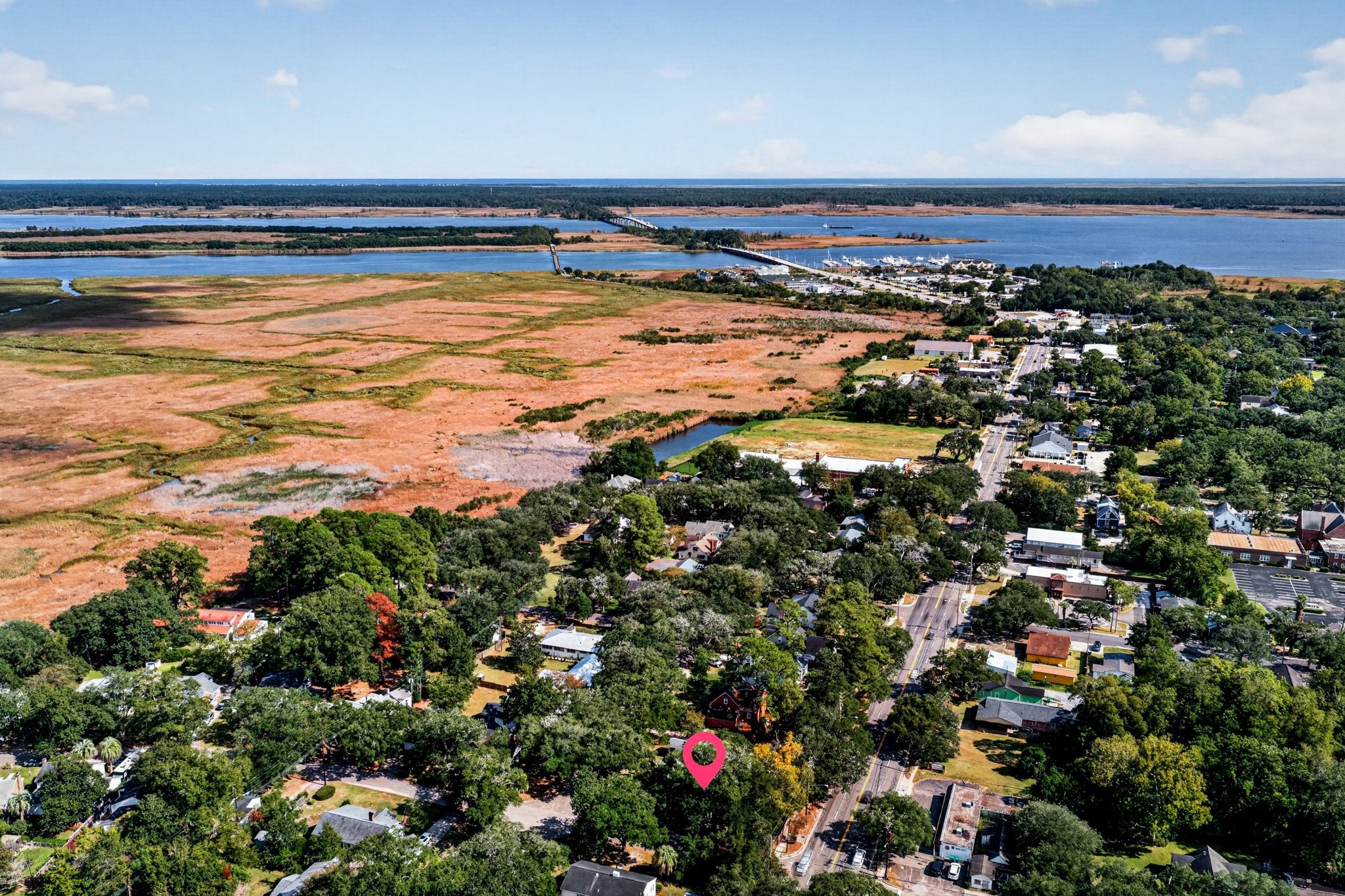
The Willowbank name lives on in a residential neighborhood just north of downtown. The Willowbank subdivision, laid out north of Church Street, was already being planned and advertised by 1941, and it grew into one of Georgetown’s established neighborhoods.
Today Willowbank sits just north of the Historic District, off Church Street (U.S. 17). Its streets are shaded by big live oaks, its homes range from mid-century brick ranches to cottage-style houses on generous lots, and it is a short drive to Front Street, the Harborwalk and Winyah Bay. Few people who drive through know the name goes back to Georgetown’s first airplane flight.
Living in Willowbank today
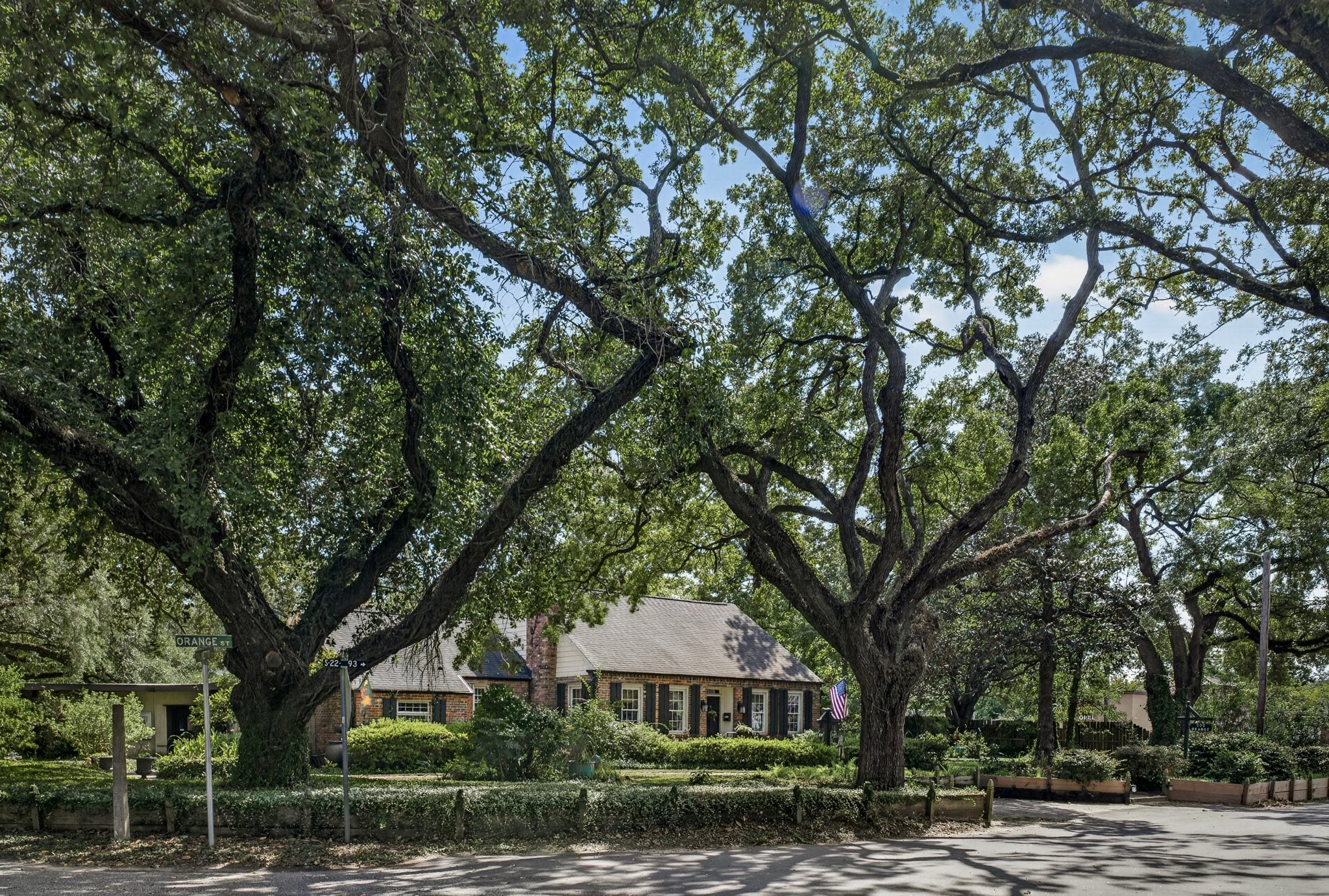
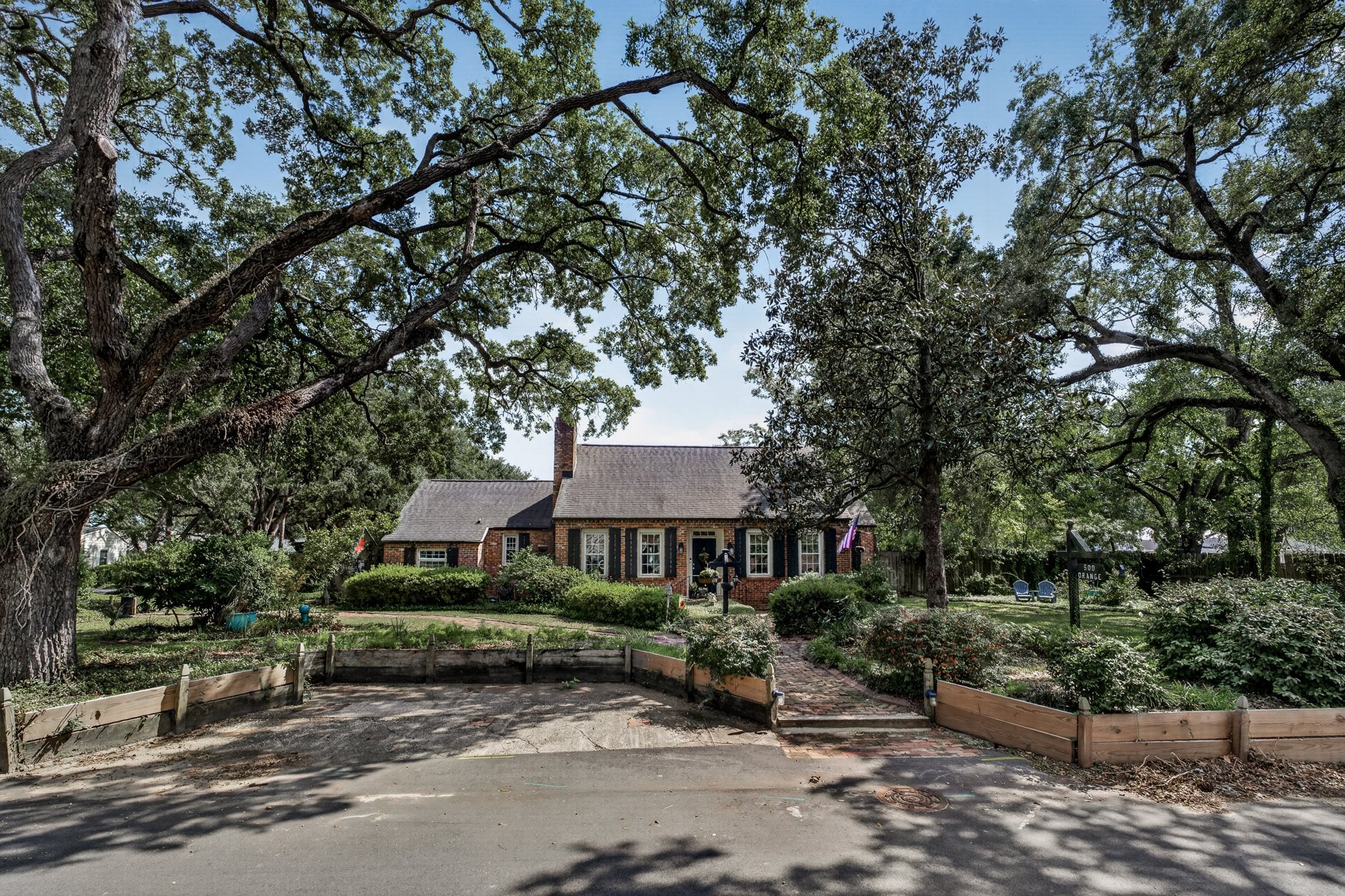
Homes in Willowbank don’t come up often. Right now one of its most storybook homes is for sale: 500 Orange Street, a brick English cottage with secret garden rooms, beams made from real ship hulls (one with stained glass set into its old conduit openings), a vine-covered pergola and a carriage-house-style apartment. It has 4 bedrooms and 3 baths, all on one level, and it’s offered at $697,800.
Thinking about a home in Willowbank or anywhere in historic Georgetown? Talk with Justin Steel at The Steel Group. We know the neighborhoods, and the stories behind them.
Sources
- Georgetown County Digital Library, Tarbox Family Photograph Collection: “Tarbox Airplane,” “Gurdon Tarbox in Early Airplane” and “Former Rice Fields at Willowbank” (July 1911), and the collection description.
- Georgetown Times, July 15, 1911, headline as quoted in the Georgetown County Digital Library records.
- Debby Summey, “No trespassing in Willowbank,” Post and Courier (Georgetown), March 10, 2011, citing the Georgetown Semi-Weekly Times, September 1897.
- South Carolina Department of Archives and History, Georgetown Historic District Survey (2010), p. 4-6.
- Georgetown County Airport history: Georgetown County Airport.